

Why Learning Business English Vocabulary Isn't Enough
By Kat Rogan
Aug 24, 2026
Business English, Online Tutoring, Online Language Learning
Why Learning Business English Vocabulary Isn't Enough
By Kat Rogan
In nearly 20 years of teaching English, I've learned that one of the biggest mistakes students make when learning Business English is focusing too much on individual vocabulary words.
They learn the terminology.
They memorize definitions.
They complete vocabulary exercises.
And then they find themselves in an actual meeting, talking to a customer, speaking with a manager, or trying to explain a problem — and suddenly they don't know what to say.
The problem isn't necessarily their vocabulary.
The problem is that knowing words is not the same thing as knowing how to communicate.
This is something I've talked about before when discussing the importance of the rubric and organization in effective communication. Whether a student is preparing for an IELTS or TOEFL speaking test or learning English for their career, communication works better when there is a structure behind it.
That's why I don't teach Business English as a collection of vocabulary lists.
I build it progressively.
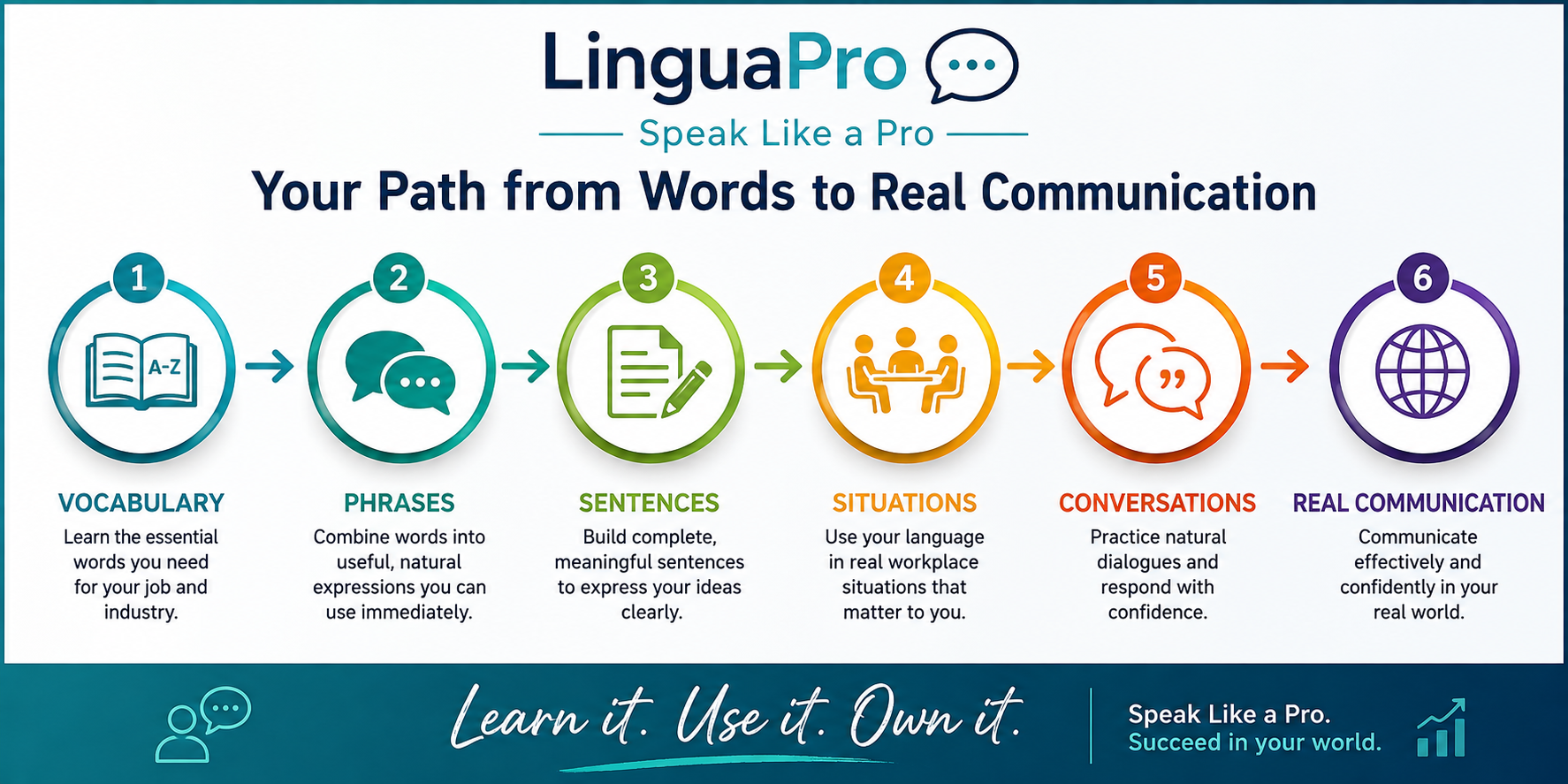
Vocabulary → Phrases → Sentences → Situations → Conversations → Real Communication
That progression gives the student a framework for turning what they know into something they can actually use.
Start With the Vocabulary That Matters to You
The first question I ask isn't, "What business vocabulary do you know?"
It's, "What do you actually need to talk about?"
A person working in sales needs different vocabulary from an accountant. A project manager needs different language from a hotel manager. Someone working in customer service has different communication requirements from an engineer.
So I start with the student's actual job, career, industry, responsibilities, and goals.
If a student works in project management, for example, we might work with words such as:
deadline
deliverable
milestone
priority
progress
schedule
timeline
But I don't stop there.
Knowing the word deadline isn't enough.
The student needs to know how that word is actually used.
Turn Words Into Useful Phrases
This is the next step I use with students.
Take the word:
deadline
Now build practical phrases around it:
meet the deadline
miss the deadline
extend the deadline
tight deadline
upcoming deadline
Now the student has something much more useful than a vocabulary definition.
They have language they can actually put into a conversation.
This is an important distinction because professional communication doesn't happen one vocabulary word at a time.
We use combinations of words.
We use familiar expressions.
We use phrases that allow us to communicate an idea quickly and naturally.
That's why I want students to move from knowing the word to knowing what to do with the word.
Then Build Full Sentences
Once we've established the vocabulary and phrases, I move the student into complete sentences.
For example:
meet the deadline
becomes:
"We need to meet the deadline."
Then we make it more specific:
"We need to meet the deadline by Friday."
And then we put more information into the thought:
"We need to meet the deadline by Friday, so I'd like everyone to finish their part of the project by Wednesday."
Now we're no longer practicing vocabulary.
We're practicing communication.
The student is learning how to take a piece of professional language and use it to express a complete thought.
This is where organization becomes extremely important.
A good communicator doesn't simply know a lot of words. They know how to organize those words into an idea that another person can easily understand.
The Student's Career Should Shape the Lesson
This is one of the reasons I believe Business English lessons should be designed around the individual student.
There is no reason for a salesperson and a software engineer to spend hours learning exactly the same Business English.
They have different jobs.
They have different conversations.
They have different responsibilities.
And they have different goals.
Before I design a lesson, I want to know what the student actually wants and needs.
What situations are difficult for them?
Who do they communicate with?
Do they need English for meetings?
Presentations?
Customer service?
Negotiations?
Emails?
Job interviews?
Working with international colleagues?
Managing employees?
Speaking with clients?
Those answers determine what we practice.
The framework remains organized, but the content becomes specific to the student.
From Sentences to Real Situations
Once a student can use the vocabulary, phrases, and sentences, I want to put them into situations that resemble their actual work.
Let's say the student needs to discuss a project that is behind schedule.
We can work with vocabulary such as:
deadline
delay
progress
schedule
priority
Then phrases:
fall behind schedule
check the progress
address the delay
meet the deadline
make this a priority
Then sentences:
"We're starting to fall behind schedule."
"I'd like to check the progress on the project."
"We need to address the delay."
"This needs to be our top priority."
The student is now building toward something much more realistic than completing a vocabulary exercise.
They're preparing to have a conversation.
And Then We Practice the Conversation
This is where everything comes together.
For example:
Manager:
"How is the project coming along?"
Employee:
"We're making progress, but we're starting to fall behind schedule."
Manager:
"What's causing the delay?"
Employee:
"We're still waiting for information from the client."
Manager:
"Can you follow up with them today?"
Employee:
"Yes. I'll contact them this afternoon and give you an update."
Now the student has to do something different.
They have to listen.
They have to understand.
They have to respond.
They have to select the appropriate vocabulary.
They have to organize their thoughts.
And they have to communicate in real time.
That's the skill we're actually trying to develop.
The Framework Makes the Difference
This is why I use a framework when I design lessons.
I don't want the student jumping randomly from vocabulary to grammar to conversation and back again.
There should be a reason for each stage.
Vocabulary gives the student the building blocks.
Phrases show the student how those words naturally work together.
Sentences teach the student to express complete ideas.
Situations give those ideas context.
Conversations require the student to actually interact.
And finally, real communication allows the student to use those skills independently.
It's a progression.
Each stage prepares the student for the next one.
The Lesson Should Be Built Around Goals, Needs, and Wants
I also don't believe that effective Business English instruction should be completely standardized.
A framework should provide structure, but it shouldn't force every student into the exact same lesson.
I want to know what the student needs.
I want to know what the student wants.
And I want to understand what the student is trying to accomplish.
Those three things can be very different.
A student may need English because their company has started working internationally.
They may want to become more confident during meetings.
And their personal goal may be to qualify for a promotion.
Those details matter.
They should influence the vocabulary we choose, the situations we practice, the conversations we create, and the feedback I provide.
That's what makes a lesson personal instead of generic.
From Knowing English to Using English
I've worked with many students who know far more English than they realize.
They have vocabulary.
They understand grammar.
They can read.
They can often understand what other people are saying.
But when it's their turn to speak, everything they know isn't organized yet.
That's the gap I want to close.
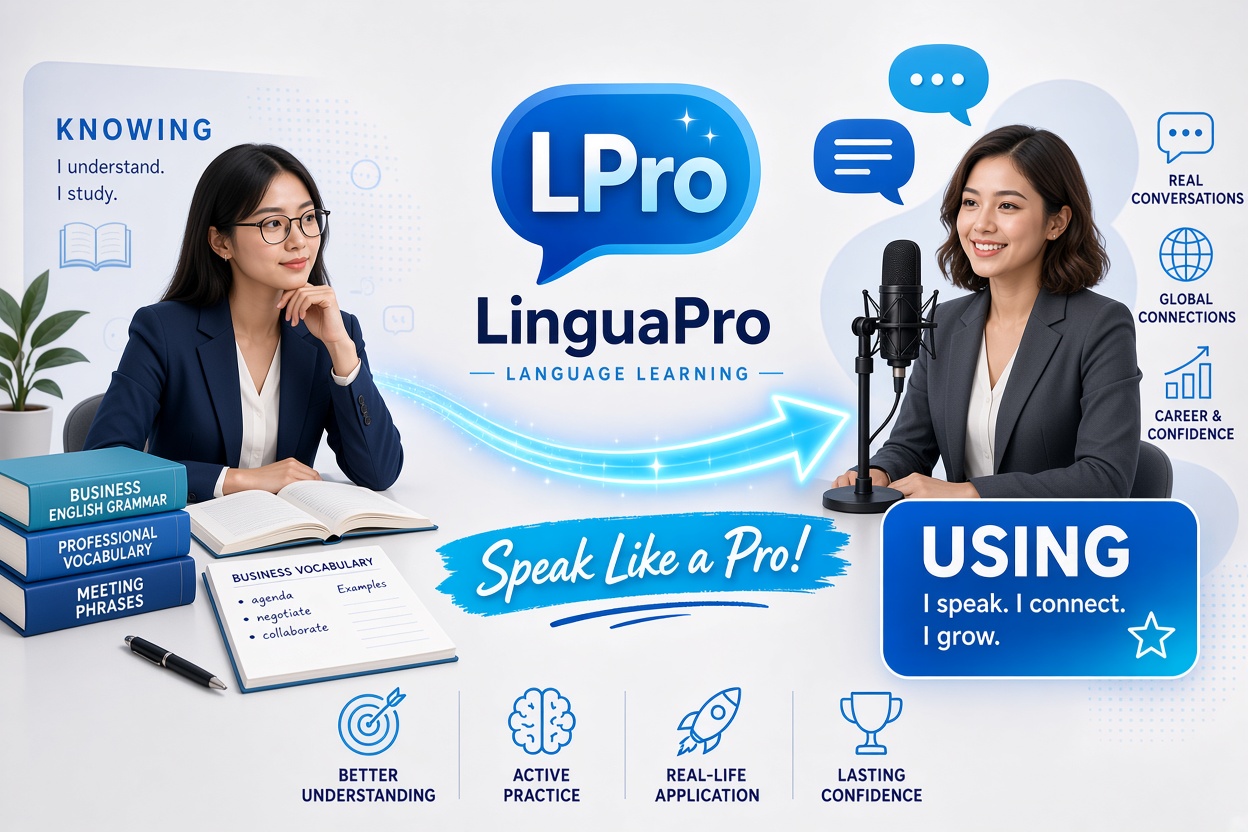
I want students to move from:
"I know this word."
to:
"I know how to use this phrase."
Then:
"I can use it in a sentence."
Then:
"I can use that sentence in my job."
And finally:
"I can have this conversation."
That is a much more meaningful measure of progress.
The goal isn't simply to know more Business English.
The goal is to be able to use English effectively when your career depends on it.
Prepare for the Communication You Actually Need
At LinguaPro, I believe English lessons should have a purpose.
Your job, your career, your goals, your needs, and the situations you actually encounter should influence what you practice.
That's why I use a structured framework that takes students from vocabulary to phrases, phrases to sentences, sentences to situations, and situations to real conversations.
Because learning a word is only the beginning.
Knowing what to say, how to organize it, and how to use it when the conversation is happening — that's communication.
And that's what we're really trying to learn.
💼 Build the Business English Skills You Actually Need

Find a Business English Tutor →
#LinguaPro #BusinessEnglish #LearnEnglish #EnglishSpeaking #OnlineTutoring #EnglishForWork #CareerEnglish