
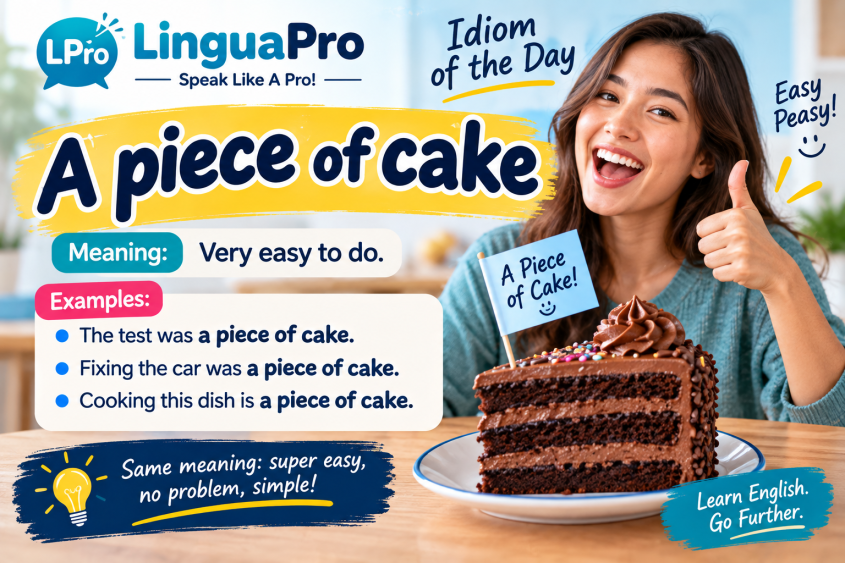
Idiom of the Day #1: Welcome to Our New Idioms Learning Series!
Idioms are some of the trickiest — and most rewarding — parts of learning English. They rarely mean what they literally say, and yet native speakers drop them into everyday conversation without a second thought. If you've ever heard someone say they're "biting the bullet" or that a task is "a piece of cake" and wondered what bullets or cake had to do with anything, you're not alone.
After years of teaching English to students around the world — from classrooms in China to online lessons with adult learners across Thailand — idioms have consistently been one of the topics students ask about most. They're also one of the fastest ways to sound more natural and confident in English, because idioms are everywhere: in conversations, TV shows, business meetings, and casual chats with friends.
That's why we're kicking off a brand-new learning series: Idiom of the Day. Each post (and matching short video) will break down one popular English idiom — what it means, where it might show up, and how to use it correctly in a sentence.
Understanding Context
Idioms often carry meanings that go far beyond their literal words, so context is everything. Take "spill the beans" — read literally, it makes no sense, but in the right context, everyone knows it means to reveal a secret.
Idioms are also deeply rooted in culture and history. Expressions like "barking up the wrong tree" or "letting the cat out of the bag" carry cultural connotations that explain why they mean what they mean. Learning that background doesn't just help you memorize the phrase — it helps you understand why it exists, which makes it far easier to remember and use correctly.
A few tips as you dive into this series:
- Learn idioms in context. Seeing an idiom used in a real sentence or conversation makes the meaning click much faster than a definition alone.
- Explore the cultural background. Knowing where an idiom comes from adds depth to your understanding.
- Practice regularly. Idioms don't follow normal grammar rules, so repetition in speaking and writing is key.
- Watch for regional variations. British and American English, for example, often have different idioms for the same idea — so what you learn here may have a few regional cousins.
- Immerse yourself. Watching TV shows or movies in English is a great way to catch idioms being used naturally.
Idiom of the Day: Top 10 to Get You Started
Here are the first ten idioms in our series — some of the most common (and useful) expressions you'll hear in everyday English.
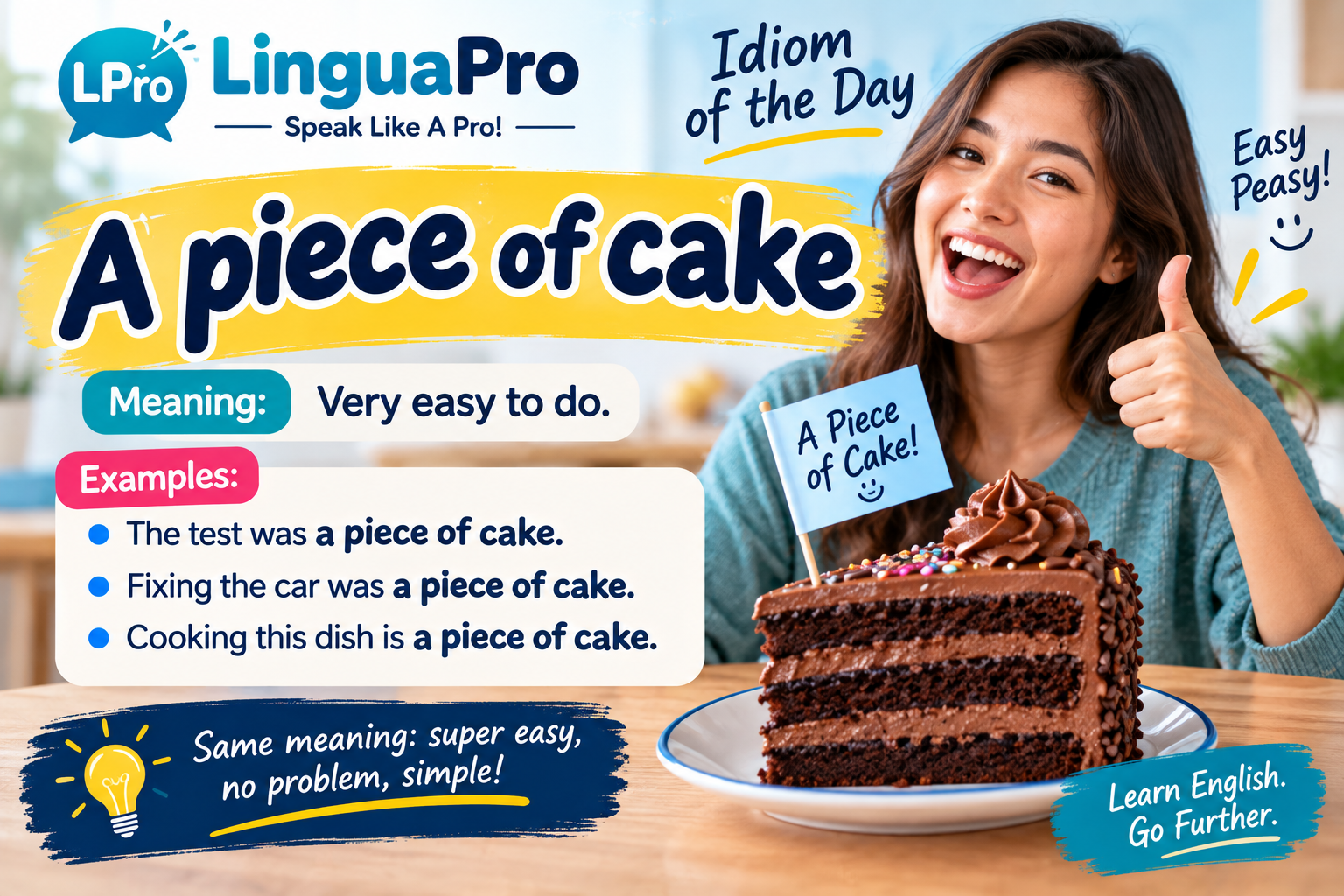
1. A piece of cake
Meaning: Very easy to do.
- The test was a piece of cake.
- Fixing the car was a piece of cake.
- Cooking this dish is a piece of cake.
2. A piece of the pie
Meaning: A share of something valuable.
- He wanted a piece of the pie from the profits.
- Everyone wants a piece of the pie in the new business.
- She got her piece of the pie from the inheritance.
3. Bite off more than you can chew
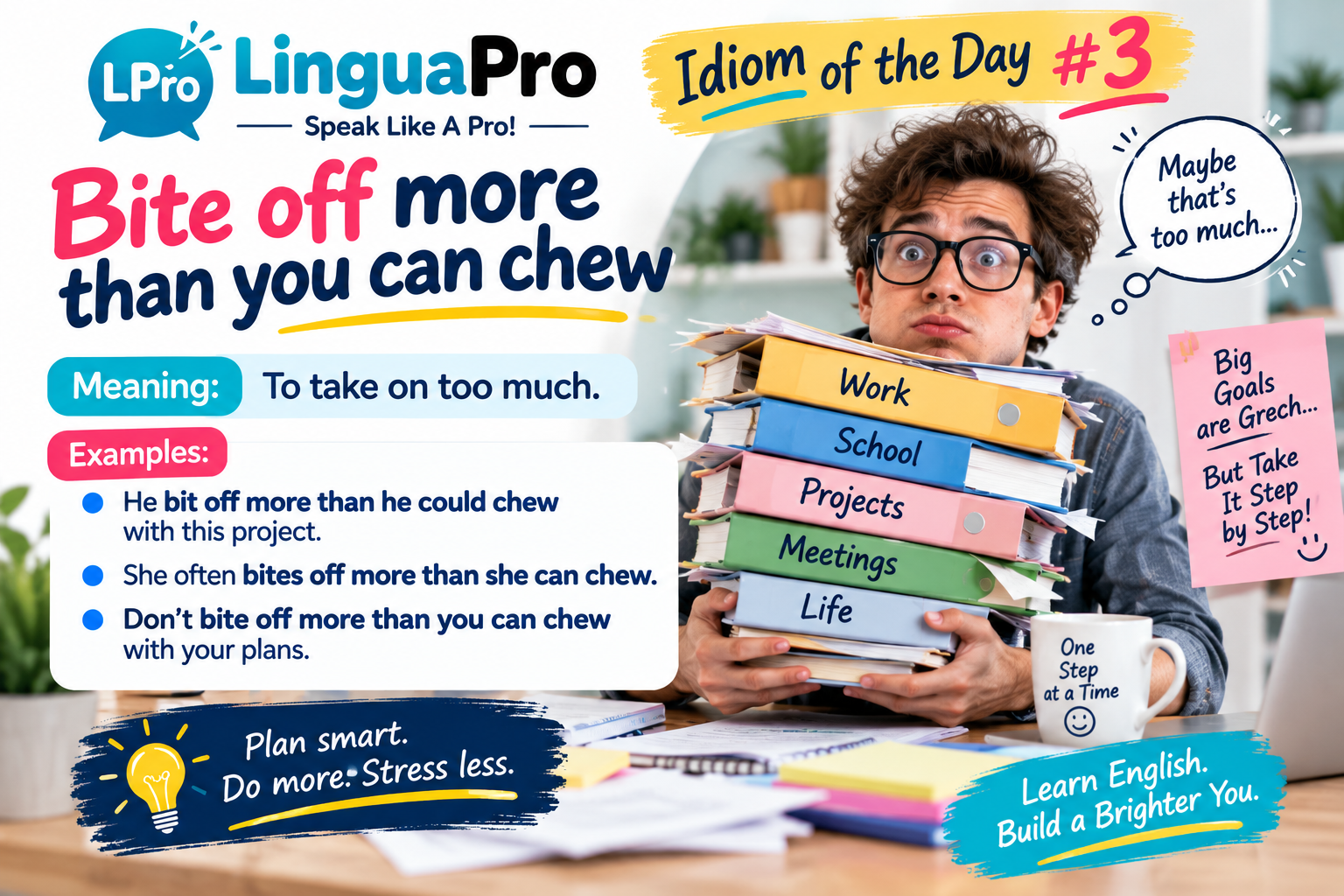
Meaning: To take on too much.
- He bit off more than he could chew with this project.
- She often bites off more than she can chew.
- Don't bite off more than you can chew with your plans.
4. Bite the bullet
Meaning: To endure a difficult situation.
- She had to bite the bullet and admit her mistake.
- He decided to bite the bullet and take the exam.
- Sometimes you just have to bite the bullet and move on.
5. Break a leg
Meaning: Good luck.
- Break a leg at your performance tonight!
- The director told the actors to break a leg.
- She wished him to break a leg before his presentation.
6. Break the ice
Meaning: To start a conversation in a social setting.
- He told a joke to break the ice.
- Games are a good way to break the ice.
- She broke the ice with a friendly greeting.
7. Burn bridges

Meaning: To damage a relationship in a way that can't be repaired.
- He didn't want to burn bridges with his old employer.
- Try not to burn bridges when you leave a job.
- She regretted burning bridges with her former team.
8. Burn the midnight oil
Meaning: To work late into the night.
- She burned the midnight oil to finish the report.
- He's been burning the midnight oil all week before the exam.
- They burned the midnight oil to meet the deadline.
9. Cost a pretty penny
Meaning: To be very expensive.
- That new laptop cost a pretty penny.
- Renovating the kitchen cost a pretty penny.
- Their vacation cost a pretty penny.
10. Cry over spilled milk
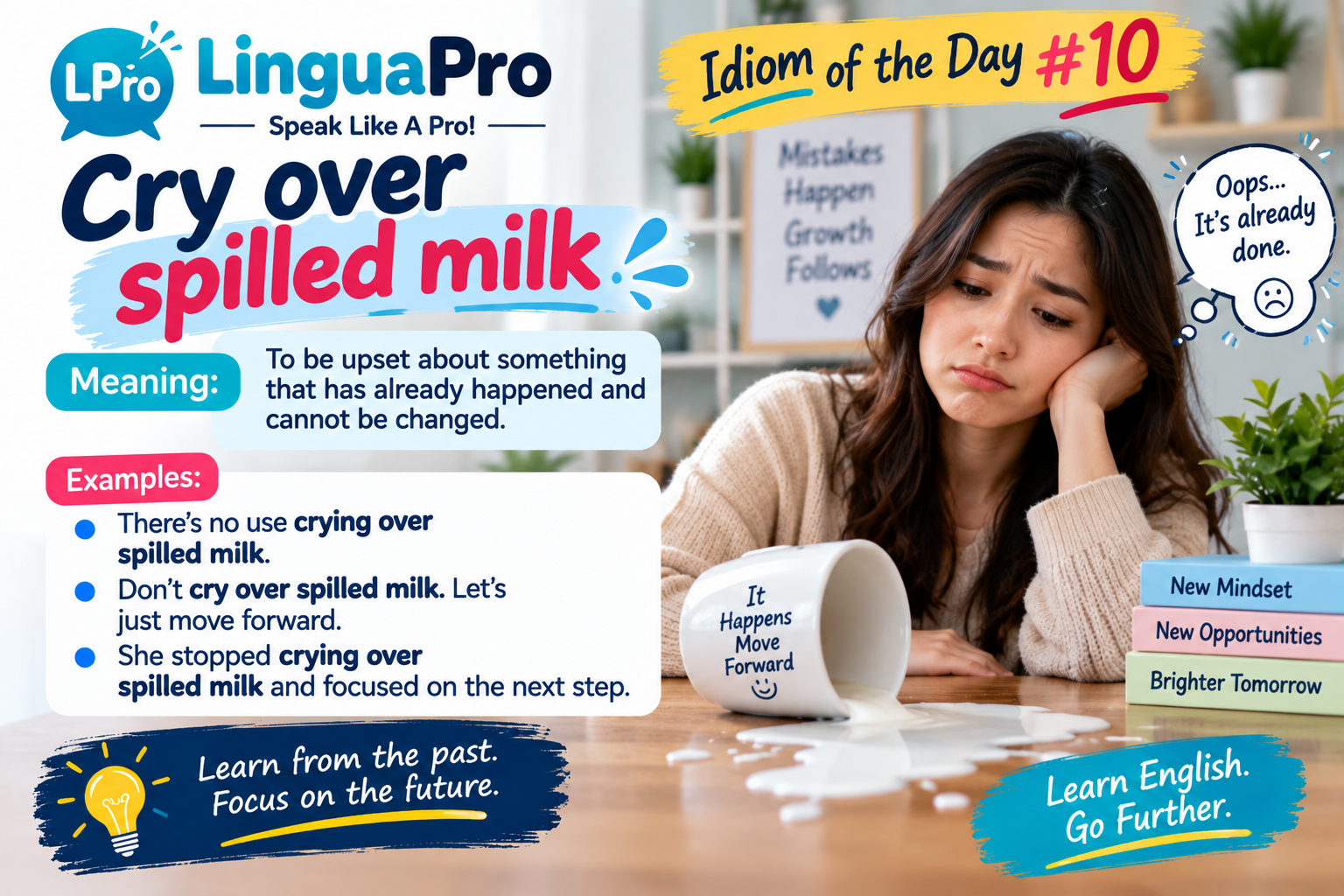
Meaning: To worry uselessly about something that's already happened.
- There's no use crying over spilled milk — let's move forward.
- He was crying over spilled milk instead of fixing the problem.
- Don't cry over spilled milk; mistakes happen.
Keep Learning with the Master English Series
These ten idioms are just the beginning! This post is part of the Master English Learning Series, featuring a full "Top 30" collection of essential idioms with meanings and example sentences — perfect for learners who want to sound more natural and confident in English.

The full series is available through our affiliated learning platform, LinguaPro linguaprotutor.com, where you can also connect with real tutors to practice using these idioms in live conversation.
Stay tuned for our next "Idiom of the Day" post — and don't forget to check out the matching video shorts on your YouTube Channel!