
Teaching English has changed dramatically. Teachers are no longer limited to working for local language schools, universities, or tutoring centers. Today, an experienced English teacher can connect with students around the world and teach from virtually anywhere.
I've spent more than 20 years teaching English, including many years teaching students throughout Asia as well as teaching online. During that time, I've taught in traditional classrooms, universities, language schools, private lessons, and online environments. I've also watched online teaching develop from something relatively unusual into a major part of the English education industry.
There are now dozens of websites where teachers can find students and teach English online. Some provide access to enormous international student markets. Some make it easy for new teachers to get started. Others give experienced teachers more independence. But I've learned that simply connecting a teacher with a student doesn't necessarily make a website a good teaching platform.
For me, the questions are much bigger. How much control does the teacher have? What does the platform charge? How quickly can teachers access their earnings? What happens when the actual lesson begins? Does the platform provide useful teaching materials and classroom tools, or does the teacher have to find everything somewhere else?
After more than two decades in education, I know what I expect from the technology I use to teach. Here are five of the major online English teaching platforms worth looking at in 2026 — and why one of them tops my list.
Preply is one of the biggest names in online language tutoring, and its enormous international marketplace is probably its greatest advantage. Teachers can create profiles, establish their availability and rates, and connect with students looking for instruction in English and many other languages.
For a teacher trying to establish an online student base, that kind of exposure can be valuable. Preply also provides scheduling, payments, an online classroom, learning resources, and other tools within its system. It has developed into much more than a simple directory connecting students and tutors.
However, the commission structure is difficult for me to overlook. Preply currently takes 100% commission from a tutor's first trial lesson with each new student. For subsequent lessons, its commission begins at 33% and gradually falls as a tutor accumulates teaching hours, eventually reaching 18%. Preply explains that the trial-lesson commission helps support student acquisition and other services provided by the platform.
From a teacher's perspective, I find that model difficult. A trial lesson is still a lesson. The teacher prepares for it, meets the student, evaluates the student's needs, discusses goals, teaches, and uses that time to establish a relationship that may continue for months or years. I believe that work has value.
Preply's size and established student marketplace remain important advantages, and some teachers may consider the commission worthwhile in exchange for the students the platform can bring them. For me, however, the amount of control a platform exercises and the portion of my teaching income it retains are important considerations.
italki has been a major name in online language education for years. The fundamental idea behind its marketplace is one that I strongly believe in: students should be able to find teachers based on their experience, personality, availability, specialties, and teaching style rather than simply choosing whoever happens to live nearby.
That international marketplace gives both students and teachers opportunities that weren't realistically available when I first started teaching. A teacher can potentially work with students living thousands of miles away, while students can search for someone who fits their particular learning goals.
But the longer I've taught online, the more I've realized that finding the student is only one part of the equation. Once a lesson is booked, I start looking at the platform from a very different perspective. I want to know what tools I have when I'm actually sitting in front of that student and teaching.
Scheduling and payment processing are important, but teachers also need effective classroom technology, materials, activities, student-management tools, and flexibility. An experienced teacher shouldn't have to build an entire collection of unrelated third-party services just to conduct a professional online lesson.
italki remains an established option that teachers considering online work should investigate. But in 2026, I expect more from a teaching platform than a marketplace alone. I want the technology surrounding the marketplace to make the actual job of teaching easier.
Cambly takes a somewhat different approach from many traditional tutoring marketplaces. Its emphasis on conversation makes it relatively straightforward for people to begin speaking with English learners online, and teachers have considerable flexibility over when they make themselves available.
Cambly also has a relatively low barrier to entry. According to the company, tutors don't need a teaching certificate, bachelor's degree, or previous teaching experience. That makes it an interesting option for people who want to explore online English tutoring without first building an extensive professional teaching profile.
The trade-off is compensation. Cambly currently advertises pay of $0.17 per minute, or $10.20 per hour, on Cambly and $0.20 per minute, or $12.00 per hour, on Cambly Kids. Teachers don't independently establish their hourly rate in the same way they can on some marketplace platforms.
For some people, the simplicity and flexibility of that arrangement may be exactly what they want. But for an experienced professional teacher, I think there is an important distinction between earning some money talking with English learners online and developing a long-term professional online teaching career.
Teachers can spend years developing specialties in children's education, business English, pronunciation, examination preparation, interview training, academic English, or other areas. Experience and expertise have value, and I prefer a teaching environment where teachers have greater ability to develop their own professional identity.
AmazingTalker is another large teaching marketplace and one that is particularly visible in Asian markets. Like other international tutoring websites, it gives teachers an opportunity to create a professional presence online and connect with students looking for individual instruction.
There are obvious benefits to that model. Building your own website, finding students, arranging payments, creating schedules, and managing everything independently can be extremely difficult. A marketplace can take care of many of those functions and put teachers in front of students who are already looking for lessons.
But there is always a balance between what the platform provides and what the teacher gives up in return. Fees, platform rules, competition between teachers, control over the student relationship, and the tools available for conducting lessons all matter when deciding where to teach.
This is where my expectations have changed considerably over the years. I no longer judge an online teaching website primarily by how many students it claims to have. I want to know what happens during the actual lesson.
Can I easily access materials? Can I interact naturally with my student? Are there useful classroom tools? Can I keep a child engaged? Can I manage my teaching business without constantly moving between different websites and applications?
A teaching marketplace solves the problem of finding someone to teach. A great teaching platform should also help solve the problem of how to teach them effectively once they arrive.

LinguaPro is the platform I currently teach on, and based on my own experience, it tops my list.
The biggest difference for me is that LinguaPro feels less like a marketplace with teaching added to it and more like an actual online teaching environment. Teacher profiles, student bookings, scheduling, lesson management, payments, classroom access, materials, and other teaching functions are brought together through a dedicated teacher dashboard.
The classroom is particularly important to me. LinguaPro has its own dedicated video calling system integrated directly into the platform. After using different online systems over the years, I find the LinguaPro classroom substantially more suited to teaching than simply sending a student a link to a generic video meeting.
Teaching is not the same thing as having a business meeting. During a lesson, I may need to explain something visually, show a student a teaching resource, change activities, communicate through chat, introduce written material, or move quickly to something different when a student isn't responding to the original lesson plan. The technology needs to support that without constantly interrupting the interaction between teacher and student.
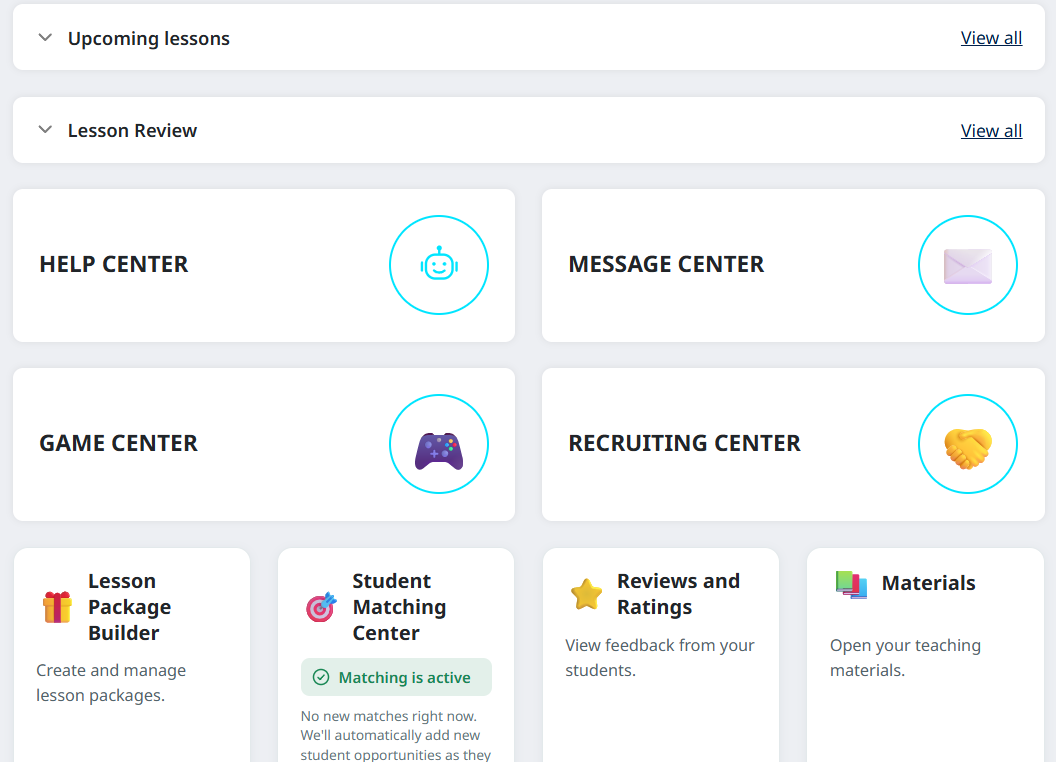
LinguaPro also includes games and teaching materials as part of its teaching environment. I find this particularly useful when working with younger learners. Anyone who has spent significant time teaching children knows that even the best lesson plan sometimes has to change instantly. If a child loses interest, having another activity available can completely change the direction of the lesson.
Those tools are useful for adults as well. Different students learn differently, and good teachers constantly adjust. Sometimes conversation is enough. Sometimes the student needs something visual. Sometimes a reading or structured activity works better. Technology shouldn't tell an experienced teacher how to teach; it should give the teacher more options.
The dedicated teacher dashboard is another feature I particularly like. Online teachers have much more to manage than their classroom. We have schedules, availability, students, upcoming lessons, teaching resources, profiles, payments, and other administrative responsibilities. Having those functions organized within one teacher environment saves time and makes the platform feel much more like a professional workplace.
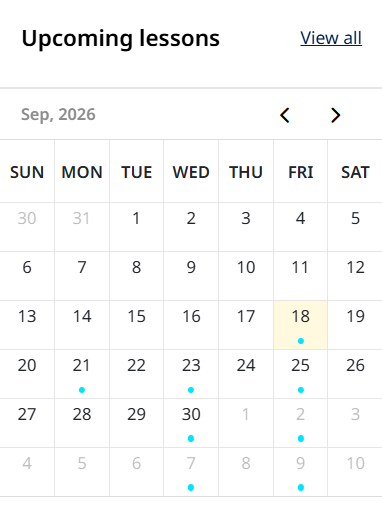
LinguaPro also has a Google Play app, extending the system beyond the main desktop website. That's increasingly important because online education doesn't exist exclusively on desktop computers anymore. Students and teachers expect to be able to access important parts of their learning and teaching environment from different devices.
Another major difference for me is payment. LinguaPro allows teachers to access eligible earnings after the lesson has been completed, rather than making teachers wait for a long fixed payout cycle. When teaching online is your profession, access to your earnings matters. Once I've completed the work and the lesson has been successfully finished, I prefer having the ability to access the money I've earned.
LinguaPro also provides fully integrated online assistance directly within the platform. Teachers and students can access the Help Center without having to leave LinguaPro, search through outside support pages, or figure out where to go when they need help. The system combines help topics with Sophie, LinguaPro's virtual assistant, giving users a convenient place to ask questions and find assistance while using the platform.
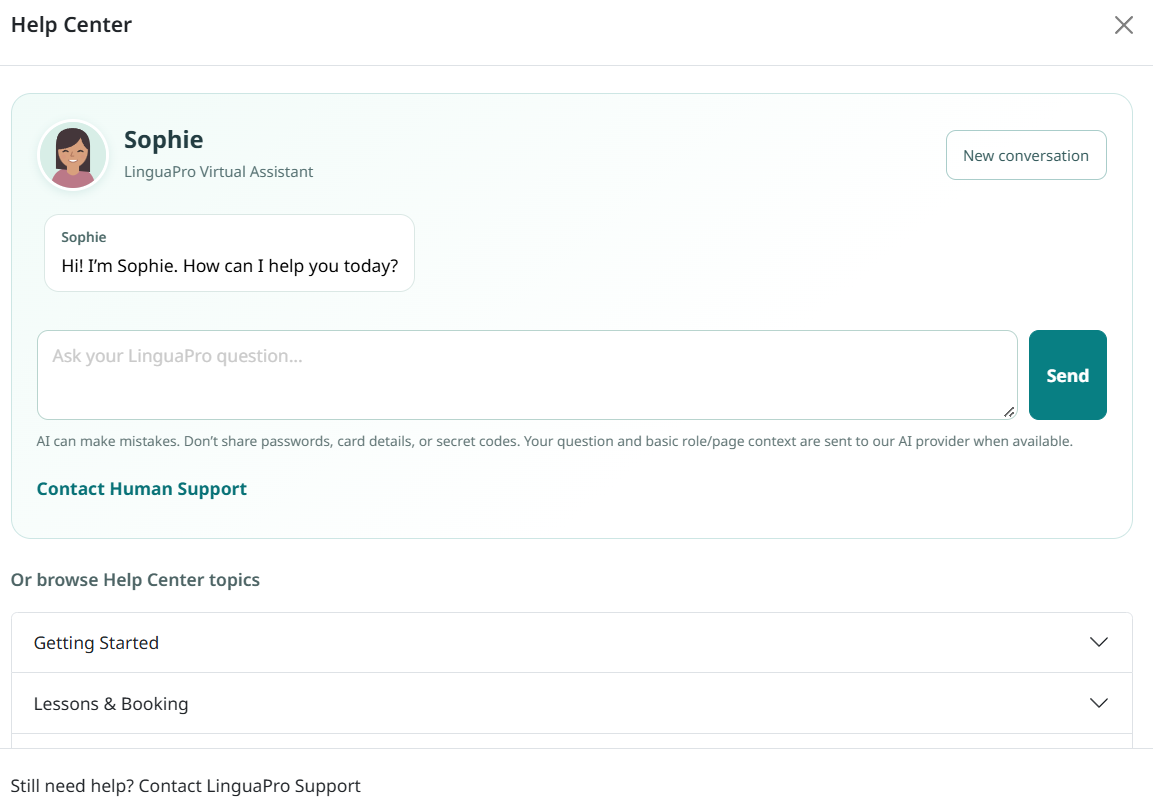
For me, this is another example of what a modern teaching platform should provide. Teachers already have enough to concentrate on during the day without spending time searching for technical help or trying to determine who to contact. Having assistance integrated directly into the platform keeps more of the teaching experience in one place and makes the entire system easier to use.
A good platform should support those decisions rather than get in the way of them.
That's what stands out most to me about LinguaPro. It isn't simply a website where I can find students. It's a place where I can actually teach.
Different teachers are going to have different priorities. A teacher who primarily wants access to a very large existing marketplace may find Preply attractive. Someone interested in an established international language marketplace may prefer italki. A person looking for flexible conversational work may find Cambly's model appealing, while AmazingTalker provides another established marketplace to consider.
I'm looking for something different. I want professional independence, high-quality integrated video, teaching materials, games, classroom tools, a dedicated teacher dashboard, flexible lesson management, and a payment system that gives me access to eligible earnings quickly. I also want technology that supports the way I teach rather than forcing me to change my teaching around the limitations of the platform.
After more than 20 years of teaching English in classrooms and online, those things matter to me far more than simply choosing the website with the biggest name.
That's why, based on my own experience as a teacher, LinguaPro tops my list of websites to teach English online in 2026.
If you're an experienced English teacher looking for a modern online teaching environment, take a look at LinguaPro and decide whether it fits the way you want to teach.
LinguaPro provides teachers with an integrated video classroom, teaching materials, games, scheduling and student-management tools, a dedicated teacher dashboard, payment infrastructure, and the professional flexibility to develop their own approach to online teaching.
🌟 Create your LinguaPro teacher profile and start building your online teaching career.
LinguaPro — Speak Like A Pro. Teach Like A Pro.